Supplements: Slimming Pills

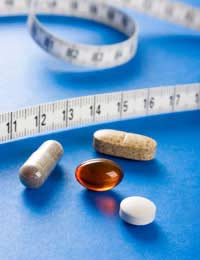
The following provides guidelines for the safe use of alternative diet pills.
To deal with the problem of being overweight, consumers who have become frustrated with conventional methods of weight loss have often resorted to medications. Otherwise known simply as "diet pills," these are used either in addition to or instead of proper nutrition and exercise. However, side effects and related challenges in securing the required physician's prescription have led some individuals to seek over-the-counter, naturopathic alternatives. What both of these types of products have in common is that they all claim to work via one or a combination of the following principles:
- "Burning" fat or lipotropic, increasing the use of fat for energy.
- Suppressing appetite, either by creating a sense of fullness or controlling food cravings
- Increasing metabolism, the rate at which calories are used
- Suppressing absorption of sources of calories, including fats and/or carbohydrates
Truth vs. Hype
The following points are crucial to keep in mind when considering trying slimming supplements:- One of the major myths about diet pills and supplements is that they can be effective complete substitutes for proper nutrition and exercise. Research and consumer experience has shown that weight and health goals are either not reached or not maintained in this manner.
- Another myth is that these products are appropriate for anyone wishing to get or stay slim. To prescribe conventional weight loss medications, physicians use specific criteria to determine whether or not the fit is right. The following are also recommended in the arena of alternative supplements:
- Body mass index (abbreviated BMI) of 27 or more; BMI is calculated as body weight in kilograms divided by height in metres squared (kg/m2)
- Dangerous medical complications of obesity, such as diabetes, high blood pressure or sleep apnea that outweigh the risk of side effects
- Unsuccessful attempts at weight loss through conventional methods
- In contrast to prescription diet pills, herbal alternatives have not been systematically researched in humans. For this reason, they are believed to not be as powerful, rather to act more to motivate the user to eat less.
- Further, most supplements are not regulated by government bodies at the same level as are medications. As a result, manufacturers are free to make unproven and misleading claims, and often are not required to provide safety information.
Side Effects
As is done with prescription diet pills, possible advantages of slimming supplements should be weighed against possible health risks. It is important to keep in mind that despite most being less strong than conventional drugs, they may still pose a threat to underlying medical conditions. The following are primary areas of concern:- Some supplements contain stimulants, such as caffeine. These can be habit-forming and lead to dependence.
- Some of the ingredients in supplements have been closely linked with increases in blood pressure and even organ failure - and occasionally even removed from the market as a result.
- Supplements limiting the absorption of carbohydrates or fats can cause gas, bloating, and/or diarrhoea in users. While not necessarily life-threatening, these effects are important to recognize.
- Some companies with substandard manufacturing methods enable contaminants to enter their products. These are associated with their individual set of side effects. Laboratory analysis should be provided on the products.
- If you take in significantly less calories than are needed for basic bodily functions and physical activity, your metabolic rate usually slows down. As a result, weight loss also slows or becomes impossible, and lost weight is regained as soon as any pills are stopped or with any increases in dietary intake.
Be Informed
Sound resources for advice are those with no connection to a company or industry manufacturing or marketing supplements. They may include medical texts, health-related journals, websites, or preferably, licensed professionals such as dieticians, physicians, and exercise physiologists. Regardless of what you choose, always keep your doctor informed of what products you are using.In addition, independent consumer groups have been started to summarize user experience and provide ratings for efficacy and safety of various products. The cautions here include the following:
- Self-reporting of results may leave out key information, such as changes in diet and activity the user also undertook. Therefore, efficacy of the product may appear falsely high.
- Lack-of-efficacy claims by testing may be the result of subpar levels of active ingredients. Some consumer organisations also evaluate the content of the products themselves and publish the results.
Business Energy With a Difference
If you are looking for business energy or need advanced solutions like remote energy monitoring, new supplies, downgrading or upgrading capacity, have a no obligation chat with Purely Energy.
To find our more get in touch here. or call 0161 521 3400.